Speaker Information
Coming Soon.

Laura Adang, MD, PhD, MSTR
Laura Adang, MD, PhD, MSTR is an attending physician in the Division of Neurology at Children’s Hospital of Philadelphia (CHOP), specializing in the care of children with leukodystrophies. Dr. Adang is a magna cum laude graduate of the University of Georgia’s Foundation Fellowship scholarship program and a graduate of the Medical Scientist Training Program at the University of Virginia, where she received both her M.D. and Ph.D. Her graduate work characterized the immune evasion mechanisms of herpes virus infections. She completed her pediatrics and child neurology residencies, fellowship training in multiple sclerosis, and a masters of translational research at the Children’s Hospital of Philadelphia and the University of Pennsylvania.
She is also course director of the Predoctoral Preparatory Program at the Institute for Translational Medicine and Therapeutics (ITMAT) program at the Perelman School of Medicine of the University of Pennsylvania. Her work has been published in Cell, Journal of Clinical Investigations, and Journal of Virology, among others.

Rebecca Ahrens-Nicklas, MD, PhD
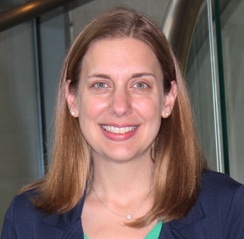
Dr. Rebecca Ahrens-Nicklas is an Associate Professor of Pediatrics in the Division of Human Genetics at Children’s Hospital of Philadelphia (CHOP) and the University of Pennsylvania and directs the Gene Therapy for Inherited Metabolic Diseases Program at CHOP. She completed MD/PhD training in Physiology and Biophysics followed by clinical training in Pediatrics, Clinical Genetics, and Metabolism. She cares for children with rare diseases—particularly neurometabolic disorders—and combines clinical work with translational research to accelerate therapy development.
Her laboratory pursues gene discovery and investigates the molecular and cellular mechanisms that drive rare disease pathology, with the goal of translating those insights into targeted treatments. She partners closely with patient advocacy groups to conduct natural history and biomarker studies that enhance clinical-trial readiness and meaningful outcome measurement. Her research includes development and evaluation of gene replacement and gene editing strategies.
Matthias Baud, PhD
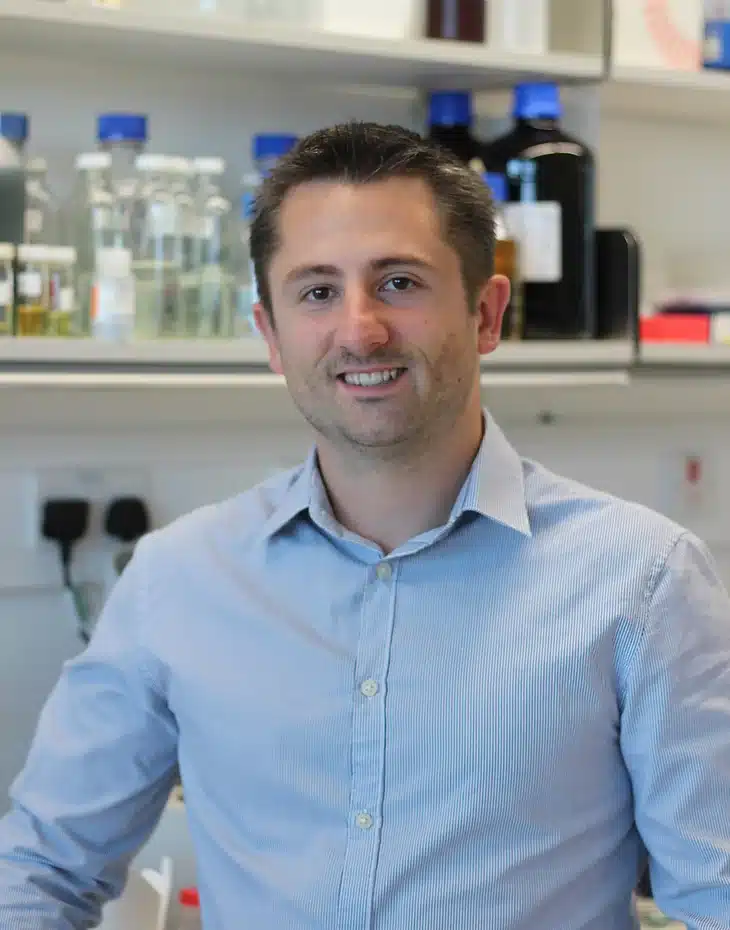
Dr. Matthias Baud is an Associate Professor in Medicinal Chemistry and Chemical Biology at the University of Southampton.
Dr. Baud obtained his BSc from the Université de Besançon (France) in 2006 and MSc from the Ecole Polytechnique Fédérale de Lausanne in 2008. He then moved to the UK to undertake PhD studies at Imperial College London under Professor Matthew Fuchter, working on the development of new chemical probes for epigenetics. After obtaining his PhD in 2011, he moved to the University of Cambridge to work with Professor Alessio Ciulli, followed by a short stay at the School of Life Sciences at the University of Dundee. From 2013 to 2016, he held an MRC Career Development Fellowship at the MRC Laboratory of Molecular Biology in Cambridge, to investigate protein reactivation by small molecules in oncology. He joined the School of Chemistry at the University of Southampton in September 2016, and was promoted to Associate Professor in 2022.
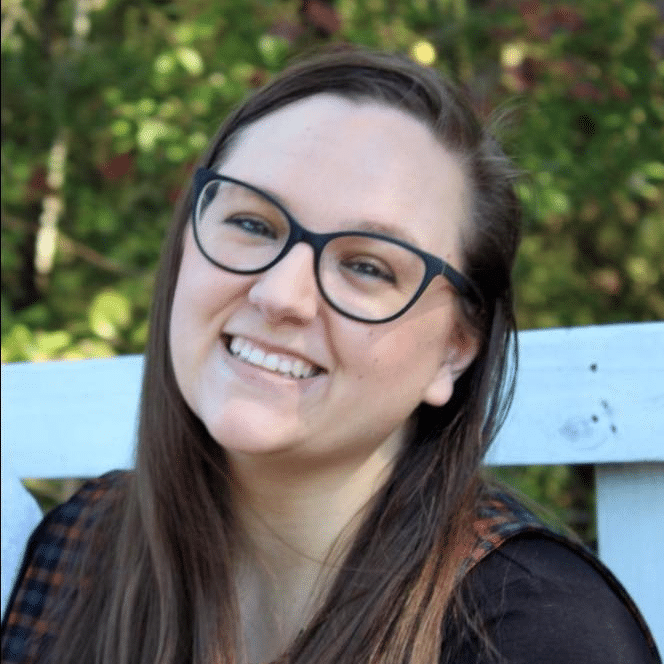
Brenna Bentley, MS, CGC
Genetic Counselor
Brenna Bentley is a certified genetic counselor who serves as the Patient & Family Advocate and Patient Research Coordinator for the United MSD Foundation. Since joining the Foundation in 2020, she has led patient and family support initiatives while overseeing the Foundation’s Patient Registry, Biobank, and patient-centered research initiatives that advance the understanding of Multiple Sulfatase Deficiency (MSD) and improve the lives of those affected. Brenna earned her Bachelor of Science in Biology, with minors in Chemistry and Psychology, from the University of Alabama at Birmingham (UAB) before completing a Fulbright Fellowship at the Estonian Biobank. She returned to UAB to earn her Master of Science in Genetic Counseling in 2020. Through her work alongside families, clinicians, and researchers around the world, Brenna is committed to ensuring that the lived experiences of individuals across the expanding MSD phenotype help shape research priorities, educational resources, and clinical care.

Krista Ortega, MS, GC
Genetic Counselor
Krista Ortega, MS, GC, brings a wealth of experience as a genetic counselor, who graduated with her Master’s in Genetic Counseling from Arizona State University. She has a deep passion for making genetics accessible to patients, providers, and communities who have historically been left out of the conversation. Krista believes that the most important work in genetics right now isn’t just happening in clinics; it’s happening in the spaces between science and people, in the conversations that turn complex data into decisions that actually change lives.
Krista has spent years working at the intersection of genetics and healthcare — educating patients, supporting providers, navigating the research, and advocating loudly for communities who deserve better access to genetic care. As an alumna of the UMSDF Student Ambassador Program, she has worked in oncology, prenatal, pediatrics, rare disease, and research settings, all guided by her genuine love of translating science into something people can actually use.

Hugh Britton, PhD
In Nov 2024, Dr. Britton joined the Baud Group after working in the Southampton Chemistry department as a teaching fellow in the Organic Section. He has previously studied at Birmingham, UEA, Bristol, Sussex and UCL on projects ranging from carbohydrates, total synthesis, and photochemistry to peptide bioconjugates.
He is a returnee from industry, having worked at GSK and Sigma-Aldrich in manufacturing and process chemistry and at BTG (British Technology Group) working on X-ray-detectable, polymer-based biomedical devices.

Delaney D. Ding
MD-PhD Predoctoral Fellow
Delaney D. Ding is an MD-PhD trainee at the University of Florida, where he is completing a PhD in epidemiology. His work encompasses dermato-epidemiology, complex medical dermatology, pediatric dermatology, and patient-centered outcomes and education. He is an NIH NIAMS F30 Predoctoral Fellow and is helping to lead the clinical content development and literature synthesis for the United MSD Foundation’s ichthyosis resource.

N. Matthew Ellinwood, DVM, PhD
N. Matthew Ellinwood, DVM, PhD, trained in molecular biology, reproductive physiology, innate immunity, and veterinary medicine at Colorado State University. Matthew did his residency in veterinary medical genetics and a postdoctoral fellowship in comparative medicine at the University of Pennsylvania, followed by a gene therapy fellowship (University of Nantes). He is Professor Emeritus at Iowa State University, where he worked (2004-2020) on natural history and preclinical studies of the MPS I and IIIB dog models. He served (2020-2025) as Chief Scientific Officer with the National MPS Society, Inc., where he guided research toward clinical and public health progress, particularly newborn screening. Before becoming CSO, he served on the Society’s Scientific Advisory Board (SAB, 2004-2020). He is an active SAB member of the International MPS Network.
Currently, he consults on metabolic disease issues in public health and newborn screening with Connetics Consulting, LLC. He has direct experience with preclinical studies of hematopoietic stem cell transplantation, intravenous enzyme therapy, intracisternal enzyme therapy, intraventricular enzyme therapy, systemic intravenous AAV gene therapy, and intraparenchymal CNS AAV-based therapy. His work on preclinical models of genetic diseases includes: SCID; MPSs I, IIIA, IIIB, IIID, VI, and VII; ML II alpha/beta; congenital glaucoma; and retinitis pigmentosa.

Amy Gaviglio, MS, CGC
Genetic Counselor
Amy Gaviglio is a genetic counselor and the founder and CEO of Connetics Consulting, LLC, which provides newborn screening and rare disease implementation, policy, and advocacy services globally. Amy currently works with the Centers for Disease Control and Prevention, the Association of Public Health Laboratories (APHL), Expecting Health, Primary Health, amongst many others. She is co-chair of APHL’s New Disorders in Newborn Screening Subcommittee, is the Vice Chair of the NBS Expert Panel for the Clinical and Laboratory Standards Institute, sits on the Scientific Advisory Board for the MPS Society, and serves on the Executive Board for the International Society of Neonatal Screening. Finally, Amy is the current Chair of the Board of Directors for the EveryLife Foundation.

Michael Gelb, PhD
Adjunct Professor of Biochemistry
Dr. Michael H. Gelb is Professor of Chemistry and Barbara L. Weinstein Endowed Chair in Chemistry, Adjunct Professor of Biochemistry at the University of Washington. Major developments in the Gelb lab include discovery of protein prenylation, development of ICAT proteomic reagents, identification of phospholipases involved in lipid mediator generation, development of anti-parasite drugs, and development of mass spectrometry for newborn screening. Awards include: Guthrie Award (Int. Soc. of Neonatal Screening), Repligen Award in Chemistry of Biological Processes (Amer. Chem. Soc.), Univ.of Washington Faculty Lecture Award, Gustavus John Esselen Award (Harvard Univ.), AAAS Fellow, NIH Merit Award, Medicines for Malaria Project of the Year Award, Pfizer Award in Enzyme Chemistry, ICI Pharmaceuticals Award for Excellence in Chemistry. The Gelb lab has published more than 650 papers and 100 patents in biological chemistry. The Gelb laboratory has developed mass spectrometry for worldwide newborn screening of lysosomal storage diseases (the latest expansion of newborn screening panels).

Xinying Hong, PhD
Dr. Xinying Hong is a board-certified clinical biochemical geneticist and Assistant Professor of Pathology and Laboratory Medicine at the Children’s Hospital of Philadelphia, where she also serves as Assistant Director of the Metabolic and Advanced Diagnostic Laboratory. She earned her PhD in Chemistry from the University of Washington and completed her clinical training at CHOP. Dr. Hong’s research focuses on the discovery and clinical application of novel biomarkers to improve the diagnosis, prognosis, and treatment monitoring of inborn errors of metabolism, with a particular emphasis on lysosomal storage disorders.

Anne Kozek, MS, RD, LDN
Anne has been a registered dietitian for almost 37 years. She holds a master’s degree from the University of Illinois at Chicago. She has been working in metabolic genetics for about 20 years and about 11 years in Early Intervention. While working in Early Intervention, she took multiple feeding courses to become a feeding therapist. She loves working with families and feeding their children so they can grow and develop to their potential.

Serene Siying Lin, MBBS, PhD, FRCOphth
Serene Siying Lin is a Clinician Scientist at the University of Manchester, UK. Her clinical and research interests focus on inherited retinal diseases and rare inherited eye conditions, with a particular emphasis on genomics and improving molecular diagnosis, and on understanding disease mechanisms to pave the way for future therapies.

Peter Marks, MD, PhD
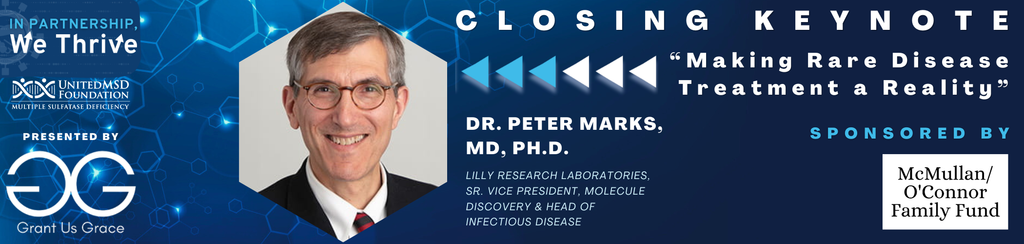
Over the past decade, Dr. Peter Marks, MD, PhD, helped change the dynamic for rare disease research, prioritized innovation and meaningful patient engagement, and championed positive collaborations between researchers, pharmaceutical companies and families during his tenure at the FDA. His open dialogue with families, advocates, and sponsors, helped the rare disease community navigate regulatory considerations, and his years of leadership to advance the safety and availability of therapies and contributions will have a lasting impact on patients and the broader health care community. Dr. Marks has been an extraordinary and unwavering advocate for families experiencing rare diseases. Dr. Marks worked tirelessly to ensure patient voices not only were heard, but those voices also informed and guided the path forward. His legacy will be marked by his compassion, courage, and dedication to making a difference for all individuals with rare diseases.
Dr. Marks received his graduate degree in cell and molecular biology and his medical degree from New York University. He completed his residency in Internal Medicine and a fellowship in Hematology/Oncology at Brigham and Women’s Hospital in Boston, later serving in academic medicine and industry before joining the U.S. Food and Drug Administration in 2012. From 2016 to 2025, Dr. Marks served as Director of the Center for Biologics Evaluation and Research (CBER), where he was integrally involved in responses to multiple public health emergencies. He was elected to the National Academy of Medicine in 2022 and, in October 2025, Marks was appointed as the senior vice president of molecule discovery and head of infectious disease at Lilly Research Laboratories.

Hartmut Niemann, Prof Dr
Dr. Hartmut Niemann is Professor of Structural Biochemistry in the Faculty of Chemistry at Bielefeld University, Germany. He studied biochemistry in Regensburg and Witten before earning his doctorate at the Max Planck Institute for Medical Research in Heidelberg, where he specialized in protein X-ray crystallography. During his postdoctoral research at the Helmholtz Centre for Infection Research (HZI) in Braunschweig, he developed a strong interest in the structure-function relationships of bacterial virulence factors—a topic that remains a focus of his lab today. Since 2020, his research has also expanded into the structure-based development of pharmacological chaperones as potential treatment for MSD with funding generously provided by the MSD Action Foundation and the Health Research Board (HRB) Ireland.

Joseph J. Orsini, PhD
Dr. Orsini has been overseeing screening for lysosomal disorders for 20 years; his laboratory was the first in the world to initiate population screening for Krabbe disease and adrenoleukodystrophy, and the first in the US to initiate screening for metachromatic leukodystrophy. His laboratory is currently screening for multiple other disorders in support of the R01-funded ScreenPlus Grant held by Dr. Melissa Wasserrstein at the Einstein College of Medicine in Bronx, NY.

Lars Schlotawa, MD
Dr. Lars Schlotawa, MD, has been working as a consultant for pediatrics, child neurology and metabolic medicine at the University Medical Centre Goettingen, Germany since 2018. He specialises in rare, neurodegenerative and neurometabolic diseases in children with a particular interest in Lysosomal Diseases. His research expertise comprises development of therapeutic approaches for lysosomal diseases through high-throughput drug screening and elucidation of cellular details of disease pathology and identification of druggable targets as well as clinical research including natural disease history studies and interventional trials in a truly translational approach. He is also affiliated with the Fraunhofer Institute for Translational Medicine, Germany.

Brad Thompson, LPC-S
Brad Thompson, along with his wife, Karen Thompson, are the founders of The HALI Project – a non-profit organization that provides counseling and educational services for families with children with special needs. Their passion is to help couples with children who have special needs find the hope, peace, and joy God has for them, even in the midst of the storms that come their way.
Brad and Karen have been married for nearly 40 years and have two children – Justin (38) and Hali (36). Hali deals with the challenges of multiple physical and cognitive special needs and is the inspiration for their work. Justin is married to Monica, and they have 2 children – Ella and Weston. Brad and Karen have been working with families since 1989 and, since 2000, have focused nearly exclusively on serving individuals with special healthcare needs and their families. Brad is a Licensed Professional Counselor – Supervisor (LPC-S). Karen is a Licensed Psychological Associate (LPA).

Malaika Vaz, MS, GC
Genetic Counseling Graduate
Malaika Vaz, MS, GC, is a genetic counseling graduate with a focus on rare disease advocacy, patient education, and reproductive genetics. Since joining the United MSD Student Ambassador Program in 2024, she has contributed to awareness and education initiatives for multiple sulfatase deficiency.
As part of her work in the program, she authored Baby Brother, a children’s storybook that helps siblings of children with rare diseases understand the genetics, emotions, and family dynamics associated with a rare disease diagnosis. Her professional interests include preimplantation genetic testing, variant interpretation, improving access to genetic services, and exploring how emerging technologies, including artificial intelligence, can enhance patient education and the delivery of genetic healthcare.

Amy Waldman, MD, MSCE
Amy Waldman, MD, MSCE is Medical Director of the Leukodystrophy Center and a pediatric neurologist at Children’s Hospital of Philadelphia. Dr. Waldman received her Medical Doctorate from Jefferson Medical College (Thomas Jefferson University). She completed her pediatrics residency at The Children’s Hospital of Philadelphia (CHOP) and child neurology residency at both CHOP and the Hospital of the University of Pennsylvania. In 2005, she co-founded the Pediatric MS Center at CHOP, and in 2014, she co-founded the Leukodystrophy Center of Excellence at The Children’s Hospital of Philadelphia, where she now serves as the Medical Director. The recipient of the National Multiple Sclerosis Society-American Academy of Neurology Foundation (now the American Brain Foundation) Clinician Scientist Development Award, Dr. Waldman completed a fellowship in pediatric and adult MS at CHOP and the Hospital of the University of Pennsylvania. During her fellowship, she obtained a Master of Science in Clinical Epidemiology degree at Penn.
Dr. Waldman works to understand metrics to quantify disease burden in acquired and genetic neurologic disorders that affect the white matter of the brain. She also focuses on clinical trial methodology to bring novel therapies to neurodegenerative diseases.



Let’s Connect
Connect with MSD families and get valuable information from medical researchers and doctors.